What Is HVAC Ducting? Types, Materials and Applications

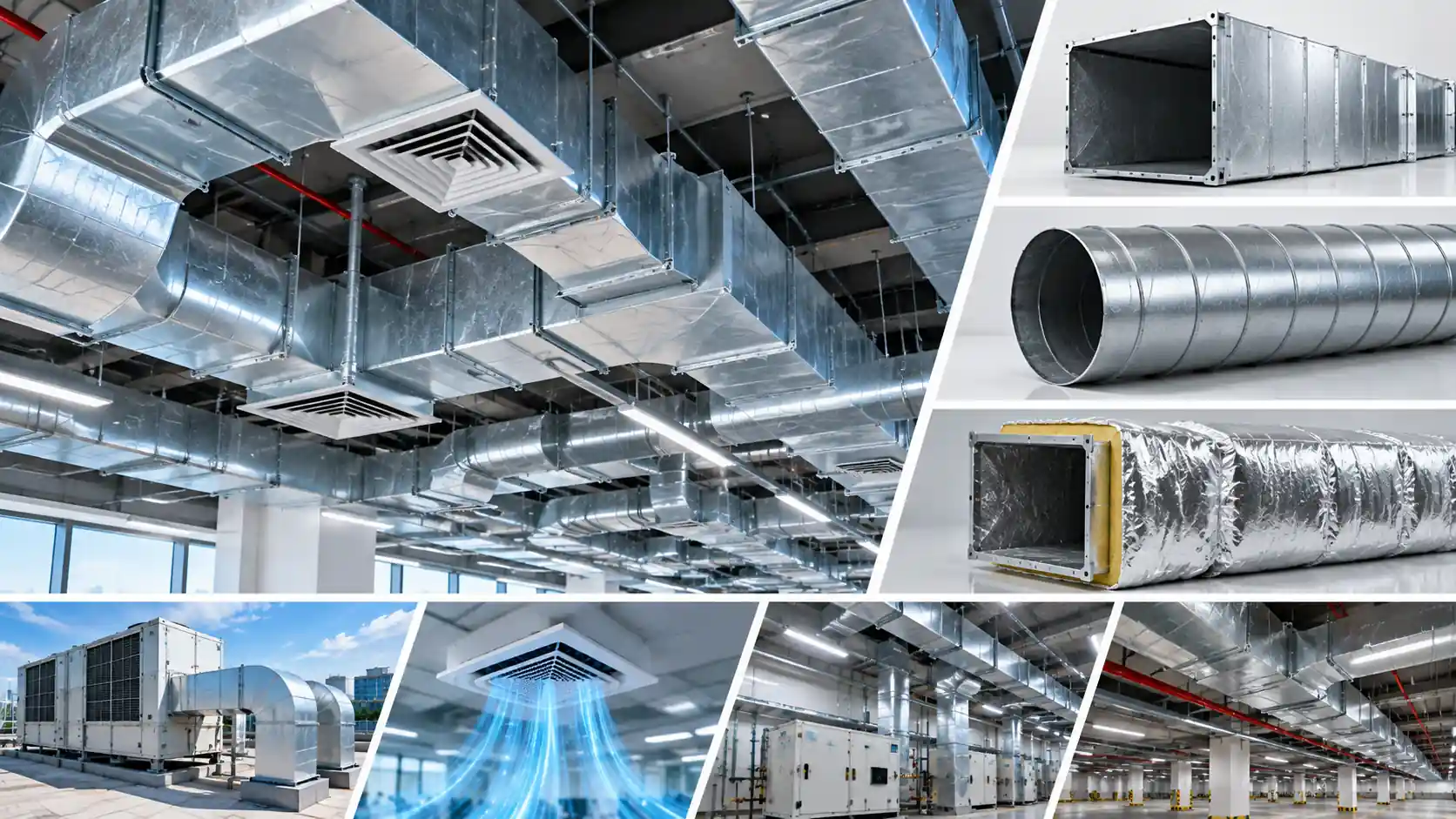
HVAC ducting is the network of enclosed channels that carries conditioned air from an air handling unit (AHU) or fan to every room in a building, then returns or exhausts stale air. Without well-installed ducting, even the best chiller or VRF system cannot cool a space evenly.
This guide explains how HVAC ducting works, the main types, the materials used, and where each is applied in commercial and industrial projects.
Quick answer: HVAC ducting is a system of metal, fibreglass, or insulated-panel channels that distributes supply air, collects return air, and removes exhaust air. The most common types are rectangular, round, and flexible ducts, usually made from galvanised iron (GI).
What Is HVAC Ducting?
HVAC ducting, also called ductwork, is the air distribution backbone of a heating, ventilation, and air conditioning system. It connects the equipment that treats the air (AHUs, FCUs, packaged units) to the spaces that need it, using grilles, diffusers, dampers, and insulation.
Ducting is sized by the project consultant based on airflow, pressure, and noise limits. A contractor then fabricates and installs it to the approved drawings. Good installation matters as much as good design, because poor joints, weak insulation, or sharp bends reduce airflow and raise energy bills.
How Does HVAC Ducting Work?
A ducting system usually has four parts:
- Supply ducts carry cooled or heated air from the AHU to the occupied space.
- Return ducts bring room air back to the unit to be filtered and treated again.
- Fresh air ducts bring outdoor air in to maintain indoor air quality.
- Exhaust ducts remove heat, odours, smoke, or fumes from kitchens, toilets, and process areas.
Fans create the pressure difference that moves the air. Dampers balance flow between branches, and fire dampers close automatically to stop smoke and fire from spreading through the building.
Types of HVAC Ducting
By Shape
- Rectangular ducts: The most common choice in commercial buildings. They fit neatly above false ceilings and suit low-height plenum spaces.
- Round (spiral) ducts: They carry air with less friction and noise, and need less material for the same airflow. They are common in exposed ceilings and industrial halls.
- Oval ducts: A compromise that offers round-duct efficiency in a flatter profile.
By Construction
- Rigid ducts: Fabricated from sheet metal or panels and used for main trunk lines.
- Semi-rigid ducts: Often aluminium, used for short connections.
- Flexible ducts: Bendable and lightweight, used for final connections to diffusers. They should be kept short because they add resistance to airflow.
Materials Used in HVAC Ducting
The right material depends on the environment, the budget, and the air being handled.
|
Material |
Best for |
Key point |
|---|---|---|
|
Galvanised iron (GI) sheet |
Offices, malls, hotels |
Most widely used. Strong, affordable, and corrosion-resistant. |
|
Pre-insulated PIR/phenolic panels |
Air-conditioned buildings, hospitals |
Insulation is built in, so installation is faster and neater. |
|
Aluminium |
Light-duty and humid areas |
Lightweight and rust-free, but dents more easily. |
|
Stainless steel |
Kitchens, cleanrooms, pharma |
Resists heat and corrosion, and is easy to clean. |
|
Fibreglass duct board |
Low-velocity systems |
Good sound absorption. Needs careful sealing. |
|
PVC or FRP |
Chemical or corrosive exhaust |
Withstands acidic fumes that damage metal. |
|
Fabric ducts |
Warehouses, gyms, factories |
Spreads air evenly over a large area. |
In India, sheet metal ducts are generally built to standards such as IS 655 and SMACNA guidelines, with sheet thickness chosen to suit the duct size and pressure class.
Applications of HVAC Ducting
HVAC ducting serves almost every building type:
- Hotels: Quiet, well-insulated ducts for guest rooms, lobbies, and banquet halls.
- Hospitals: Clean, sealed ducting for operation theatres and wards, where air quality and pressure control are critical.
- Corporate offices: Efficient supply and return networks designed for continuous occupancy.
- Shopping malls: Large trunk lines with fire dampers and smoke control for crowded, high-load spaces.
- Industrial and pharma facilities: Stainless steel or specialised ducts for cleanrooms, process exhaust, and ventilation.
- Commercial kitchens: Grease-resistant exhaust ducting built for heat and fire safety.
HAPL executes ducting solutions for hotels, healthcare, telecom, and industrial clients, alongside ventilation systems and AHU services.
How to Choose the Right HVAC Ducting
Consider these factors before finalising a ducting package:
- Building type and use: A hospital needs different ducting than a warehouse.
- Available ceiling space: Tight plenums favour rectangular or oval ducts.
- Air quality needs: Cleanrooms and kitchens call for stainless steel.
- Noise limits: Hotels and offices need insulation and acoustic lining.
- Fire and safety codes: Fire dampers and compliant materials should follow the National Building Code of India.
- Budget and lifecycle cost: The cheapest duct is not always the cheapest over ten years.
Common HVAC Ducting Problems
Even a well-built system can develop issues over time:
- Air leakage: Poorly sealed joints waste a significant share of conditioned air.
- Condensation: Weak insulation causes sweating, dripping, and mould.
- Dust build-up: Dirty ducts reduce airflow and affect indoor air quality.
- Imbalanced airflow: Some rooms stay hot while others get too cold.
Regular inspection, cleaning, and damper balancing prevent most of these. An annual maintenance contract (AMC) keeps ductwork and connected equipment performing as intended.
Frequently Asked Questions
1. What is HVAC ducting used for?
HVAC ducting distributes heated or cooled air throughout a building, returns used air to the unit, and exhausts unwanted air outdoors.
2. What is the most common material for HVAC ducting?
Galvanised iron (GI) sheet is the most common material because it is strong, affordable, and resistant to corrosion.
3. What is the difference between supply and return ducts?
Supply ducts deliver treated air into rooms. Return ducts bring room air back to the AHU for filtering and reconditioning.
4. Should HVAC ducting be insulated?
Yes. Insulation prevents energy loss, controls condensation, and reduces noise, especially in air-conditioned buildings.
5. How often should ductwork be inspected?
Commercial ductwork should be inspected at least once a year, and more often in dusty, humid, or high-use environments.
Conclusion
HVAC ducting is far more than a set of metal boxes above the ceiling. The right type, material, and installation quality decide how evenly a building cools, how much energy it uses, and how healthy its indoor air is.
Healthy Aircool Pvt. Ltd. (HAPL) is an ISO-certified HVAC and MEP contractor with 26+ years of experience, delivering ducting, ventilation, and AMC services across India, including Ghaziabad, Noida, and Gurugram.
Planning an HVAC ducting project?
Talk to HAPL’s engineering team for a site assessment and a structured proposal.